Choosing surgical lighting is an important decision when planning a new operating room or upgrading an existing facility. For many years, halogen lamps were widely used in surgical environments. Today, LED technology has become the preferred option for many modern operating rooms because of its energy efficiency, long service life, and flexible lighting controls.
However, the choice between an LED surgical light and a halogen surgical light should not be based on technology alone. Hospitals need to consider illumination quality, color rendering, heat management, maintenance requirements, installation conditions, and long-term operating costs.
This guide compares LED and halogen surgical lights to help hospital procurement teams, medical equipment distributors, and operating room planners make an informed decision.
1. What Is the Difference Between LED and Halogen Surgical Lights?
Both LED and halogen surgical lights are designed to illuminate the surgical field clearly, but they generate light in different ways.
A halogen surgical light uses an incandescent-style bulb with a tungsten filament enclosed in a halogen gas environment. Electrical energy heats the filament until it produces light. This technology has been used in medical lighting for decades, and some facilities continue to operate halogen systems because they already have the equipment and maintenance arrangements in place.
An LED surgical light uses light-emitting diodes to generate illumination. Modern medical LED systems can combine multiple light sources and optical lenses to distribute light across the surgical field. Depending on the model, users may be able to adjust illumination, color temperature, and light-field diameter.
The main difference is not simply the light source. Modern LED systems can offer more flexible control, lower power consumption, and longer light-source service life, while halogen systems may still be relevant where existing infrastructure, budget, and maintenance practices favor continued use.
2. LED vs. Halogen Surgical Lights: Key Differences
| Comparison | LED Surgical Light | Halogen Surgical Light |
|---|---|---|
| Energy consumption | Generally lower for comparable lighting applications | Generally higher because more energy is converted into heat |
| Service life | Typically longer LED light-source life | Bulbs usually require more frequent replacement |
| Heat generation | Generally lower radiant heat toward the surgical field | Generally produces more heat around the light source |
| Lighting control | May offer adjustable brightness and color temperature | Depends on the design; often has fewer adjustment options |
| Maintenance | Usually less frequent light-source replacement | Regular bulb replacement and related maintenance may be needed |
| Initial investment | Can be higher depending on features and configuration | Existing systems may be less expensive to retain |
These are general comparisons rather than guarantees for every model. Actual performance depends on the lamp design, rated specifications, operating conditions, and maintenance practices. Hospitals should compare technical data from the specific products under consideration.
3. Illumination Quality and Color Rendering
Clear, consistent illumination is essential in the operating room. Surgeons need to distinguish tissue structures and observe color differences while working in a confined surgical field. For this reason, illuminance alone is not enough to evaluate a surgical light.
Color rendering index (CRI), light-field uniformity, adjustable illumination, and shadow management should also be considered. A high CRI helps preserve the appearance of colors under the light, while a well-designed optical system helps distribute illumination more evenly across the target area.
LED technology gives manufacturers greater flexibility to combine light sources and lenses to achieve specific lighting characteristics. Some systems also offer adjustable color temperature, allowing users to select an appropriate setting for different clinical preferences and procedures.
Halogen lights can provide useful illumination, but buyers should evaluate the actual color-rendering performance and optical design of the model rather than assuming that all halogen systems perform alike.
For hospitals comparing modern systems, the VLED surgical light series offers adjustable illumination and color temperature, along with intelligent shadow management. Review the detailed specifications to determine whether a particular configuration meets the requirements of your operating room.
4. Heat Generation and Operating Room Comfort
Heat is another important consideration when comparing LED and halogen surgical lights. Halogen bulbs release a substantial amount of energy as heat, which can contribute to temperature around the lamp head and the illuminated field.
LED systems generally generate less radiant heat toward the surgical field for comparable applications. This can help reduce unnecessary heat exposure for surgical staff and patients. However, LEDs still produce heat within their electronic components, so the lamp head requires an appropriate thermal-management design.
When reviewing a product, ask for its irradiance and relevant thermal-performance data rather than relying on the light-source label alone. The mounting position, light intensity, distance from the field, and duration of use can all influence the practical result.
For operating rooms that run multiple procedures each day, thermal performance should be considered alongside illumination quality, room ventilation, and the overall equipment layout.
5. Product Example: VLED LED Surgical Light
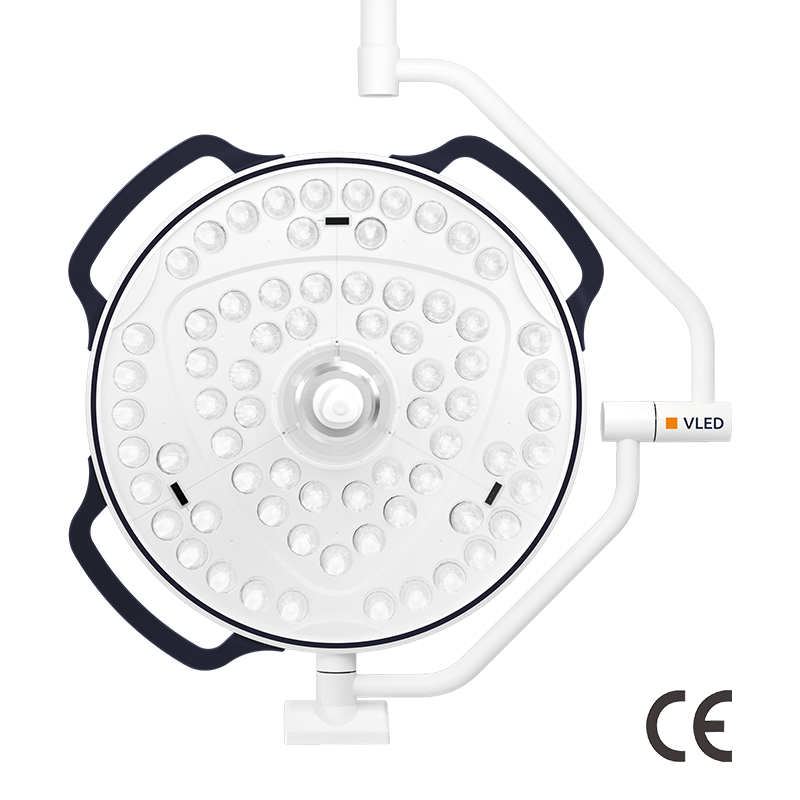
The VLED series is designed for modern operating room applications that require adjustable lighting and flexible configurations. According to the product specifications, the series offers an illuminance range of 40,000–160,000 lux at a 1 m reference distance, adjustable color temperature on selected models, and a CRI of 97.
The product range includes single-head and double-head configurations, a sterilizable handle, and intelligent shadow-management features. These options allow hospitals to evaluate the appropriate configuration for their surgical workflow, room size, and clinical requirements.
When comparing this type of LED surgical light with a halogen system, review the rated illuminance, color rendering, light-field adjustment, shadow performance, power requirements, and mounting configuration. Make sure that the specifications being compared use equivalent measurement conditions.
6. Maintenance, Service Life, and Total Cost of Ownership
The purchase price is only one part of the cost of operating a surgical light. Hospitals also need to account for electricity consumption, replacement parts, service labor, maintenance intervals, and the operational impact of equipment downtime.
LED light sources generally have a longer rated service life than halogen bulbs. For example, the VLED series lists a 60,000-hour LED service life in its product information. This is a rated specification, not a guarantee that every component in the complete lamp system will last for the same period.
Halogen systems may require more frequent bulb changes. Although individual replacement bulbs can be relatively inexpensive, recurring maintenance and the need to keep spare parts available can add to the total cost over time.
Before making a purchasing decision, estimate the expected annual operating hours and compare the following factors:
- Initial equipment price and installation costs.
- Rated power consumption and expected hours of use.
- Light-source replacement intervals and spare-part availability.
- Preventive maintenance requirements and service support.
- Warranty terms and access to technical assistance.
- Expected equipment life and replacement planning.
A total-cost comparison over the expected service period gives procurement teams a more useful basis for evaluating competing products than the initial quotation alone.
7. Product Example: CLED 328/388 LED Surgical Light
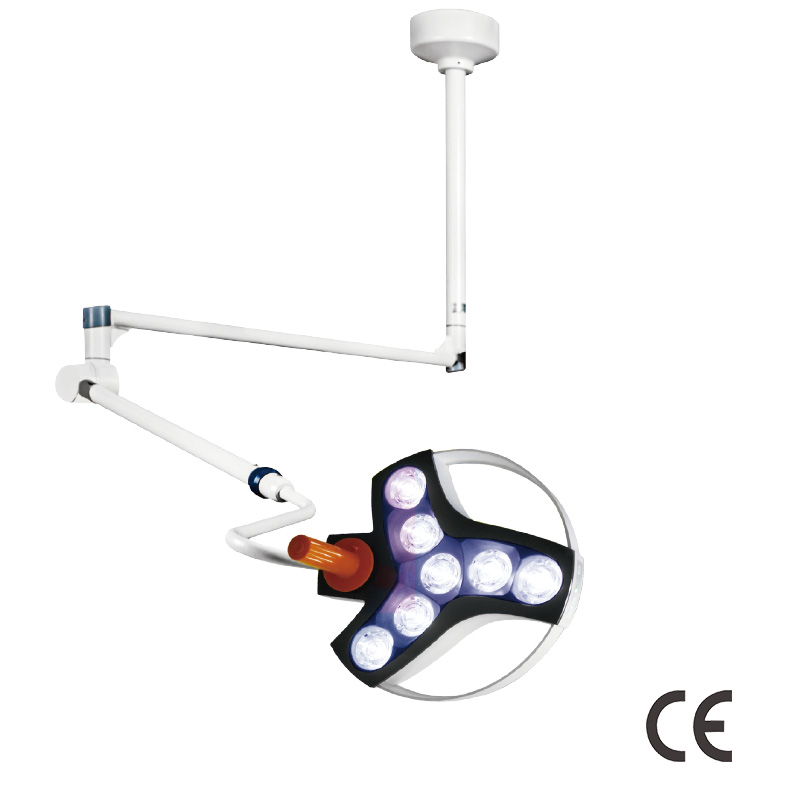
The CLED 328/388 series is another option for facilities looking for LED lighting in operating, examination, or treatment rooms. The product is available in different installation formats, including ceiling-mounted, wall-mounted, and mobile configurations, depending on the model.
Its published specifications list a CRI of 96, a color temperature of 4500 K, and maximum illuminance of at least 60,000 lux for the CLED 328 and 100,000 lux for the CLED 388. These figures should be reviewed alongside the specified measurement distance and other optical parameters when comparing models.
For facilities that need a light for different room types, installation flexibility may be just as important as the light source. Check ceiling structure, arm movement, positioning requirements, cleaning access, and the intended clinical use before choosing a configuration.
8. How to Choose the Right Surgical Light for Your Facility
For a new operating room project, LED technology is often a practical starting point because of its service life, energy efficiency, and flexible lighting features. For an existing facility, however, the best choice depends on the current equipment, maintenance resources, available budget, and planned renovation schedule.
Before selecting a surgical light, confirm the following:
- Clinical requirements: Identify the types of procedures and lighting performance needed.
- Optical specifications: Compare illuminance, CRI, light-field size, and shadow-management performance.
- Installation: Check ceiling load capacity, arm reach, clearance, and electrical requirements.
- Control features: Determine whether adjustable brightness, color temperature, or endoscopy mode is needed.
- Cleaning and maintenance: Review sterilizable handles, accessible surfaces, service procedures, and spare-part availability.
- Compliance: Verify the certifications and regulatory status applicable to the product, market, and intended use.
- Supplier support: Confirm installation guidance, warranty coverage, technical documentation, and after-sales service.
Hospitals planning a complete operating room should also consider how surgical lights will work alongside operating tables, ceiling supply units, and digital OR systems. Coordinating these elements during the planning stage can help reduce installation conflicts and improve the use of available space.
VG Medical provides surgical lighting and other operating room equipment. Explore the medical equipment range to review the available product families.
Frequently Asked Questions
Are LED surgical lights better than halogen surgical lights?
LED surgical lights generally offer longer light-source service life, lower energy consumption, and more flexible lighting controls. However, hospitals should compare the specific optical performance, installation requirements, compliance, and total ownership cost of each model before making a decision.
Do LED surgical lights produce less heat?
LED systems generally produce less radiant heat toward the surgical field than comparable halogen systems. The actual result depends on the lamp design and operating conditions, so buyers should review the manufacturer's thermal and irradiance specifications.
How long does an LED surgical light last?
Service life varies by product and component. Some LED surgical light models specify tens of thousands of operating hours for the light source. Buyers should distinguish the rated LED life from the service life of the complete system and check warranty and maintenance terms.
What specifications matter most when purchasing an LED operating room light?
Key specifications include illuminance, color rendering index, color temperature, light-field diameter, shadow-management performance, irradiance, mounting configuration, and applicable regulatory compliance. The required values depend on the intended procedures and facility requirements.
Can a hospital replace an existing halogen surgical light with an LED model?
In many cases, an LED replacement can be planned, but it is not always a direct swap. The hospital should assess ceiling mounting, structural load, electrical connections, arm clearance, installation requirements, and any necessary room modifications with a qualified supplier or installation team.
Conclusion: Making the Right Choice for a Modern Operating Room
LED surgical lights offer practical advantages for many modern operating rooms, particularly in energy efficiency, service life, and lighting control. Halogen systems may still be relevant where existing infrastructure and budget considerations support their continued use, but replacement planning should account for ongoing maintenance and operating costs.
The right decision comes from comparing real product specifications against clinical needs, installation conditions, and long-term service requirements. VG Medical has supplied operating room equipment since 2003, with a product range that includes surgical lights, operating tables, ceiling supply units, and digital integrated OR solutions.
To discuss the right configuration for your project, visit VG Medical or contact the team through the website to request product specifications and a quotation.