What is the difference between an integrated operating room and a traditional operating room? The main difference is how medical equipment, surgical images, and clinical information are connected and managed. A traditional operating room generally uses individual devices with separate controls, while an integrated operating room connects compatible equipment and information systems through a centralized platform. Both can support safe surgical procedures, but they differ in equipment coordination, information access, workflow management, and opportunities for digital upgrades.
For hospitals planning a new surgical department or renovating existing operating rooms, understanding these differences is important before selecting equipment. The right solution depends on clinical specialties, room layout, existing infrastructure, project budget, and long-term digitalization plans.
What Is a Traditional Operating Room?
A traditional operating room is a surgical environment where essential medical devices and systems usually operate as separate units. Typical equipment includes surgical lights, operating tables, medical pendants, anesthesia equipment, patient monitors, and imaging devices.
Each device generally has its own control interface and operating procedures. For example, staff may adjust the surgical light through its dedicated handle or control panel, position the operating table using its handset, and manage medical images through a separate display or workstation.
This arrangement is widely used in hospitals and can meet the needs of many surgical departments. A well-planned traditional OR can provide reliable equipment, appropriate illumination, medical gas access, and the necessary working space for surgical teams.
However, when a room contains equipment from different manufacturers and generations, staff may need to operate several independent interfaces. Video sources, patient information, and medical images may also be accessed through separate systems. As the number of devices increases, coordinating cables, displays, controls, and room layout can become more complicated.
Traditional operating rooms are not necessarily outdated. Their suitability depends on the hospital's clinical requirements, equipment condition, and workflow. For facilities with straightforward equipment needs, an independently managed configuration may remain a practical option.
What Is an Integrated Operating Room?
An integrated operating room is a surgical environment in which compatible medical equipment, audiovisual devices, and clinical information systems are connected through a centralized integration platform. Instead of managing every function independently, authorized users can access selected equipment controls, video sources, and information through a unified interface.
A typical integrated OR system may include:
- A centralized operating room control platform.
- Medical displays and video routing equipment.
- Endoscopic cameras and surgical field cameras.
- Surgical lights and operating tables with compatible control interfaces.
- Medical ceiling supply units and related room equipment.
- Interfaces with hospital information systems such as HIS, PACS, LIS, or EMR.
- Surgical video recording, broadcasting, and teaching functions.
The exact configuration varies according to the hospital's requirements and the compatibility of connected devices. An integrated system does not automatically control every device in the room. Equipment functions depend on available interfaces, communication protocols, and the selected system configuration.
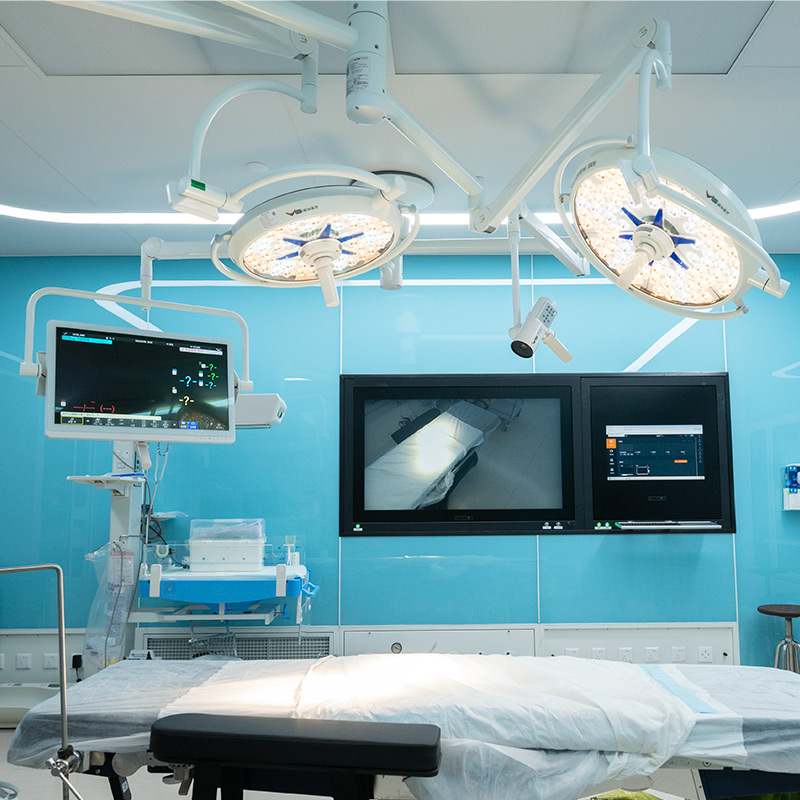
Integrated operating room environment with connected medical equipment and digital displays.
For hospitals seeking centralized equipment management and audiovisual integration, an integrated platform can provide a more coordinated way to manage operating room resources. It can also support surgical education, video documentation, and access to relevant clinical information, subject to system configuration and hospital policies.
Integrated Operating Room vs. Traditional Operating Room: Key Differences
The most important distinction is not simply the number of devices installed. It is whether those devices and information sources work independently or are connected through a coordinated platform.
| Comparison | Traditional OR | Integrated OR |
|---|---|---|
| Equipment control | Separate controls for individual devices | Centralized access to compatible equipment functions |
| Video management | Independent connections and displays | Integrated video routing and display management |
| Clinical information | Often accessed through separate terminals | Can provide access through connected information systems |
| Surgical teaching | May require separate recording and broadcasting equipment | Recording and teaching functions can be integrated |
| Workflow coordination | Staff coordinate multiple individual interfaces | Selected functions are managed through a unified interface |
| System expansion | Additional functions may require separate equipment | May support modular upgrades, subject to compatibility |
| Technical planning | Focuses on individual equipment and room infrastructure | Requires coordination of devices, networks, software, and interfaces |
For hospital procurement teams, the practical question is whether centralized integration addresses a real operational requirement. A hospital that needs multi-source surgical video, access to PACS images, and centralized device management may benefit from an integrated OR system. A smaller facility with limited digital requirements may find a conventional equipment configuration sufficient.
What Equipment Is Needed for an Integrated Operating Room?
An integrated operating room still relies on the same essential medical equipment found in a conventional surgical environment. The difference is that selected devices and information sources can be connected to a central platform.
Surgical lights
Surgical lights provide illumination of the operative field. When compatible with the integration platform, selected light functions may be accessed through a centralized interface. Hospitals should consider illumination requirements, positioning, control options, and compatibility when selecting surgical light systems.
Operating tables
Operating tables support patient positioning for different surgical procedures. Their selection should consider adjustment functions, patient positioning requirements, load capacity, accessories, and compatibility with other equipment in the room. Explore operating table solutions for different surgical applications.
Medical ceiling supply units
Medical pendants and ceiling supply units provide access to medical gases, electrical power, and equipment connections. Their position and configuration affect equipment accessibility, cable management, and the available working space around the operating table. Hospitals can review medical ceiling supply units when planning the room layout.
Digital integration platform
The central integration platform connects compatible video sources, displays, control interfaces, and information systems. Depending on the configuration, it may support video routing, equipment management, recording, broadcasting, and clinical information access.
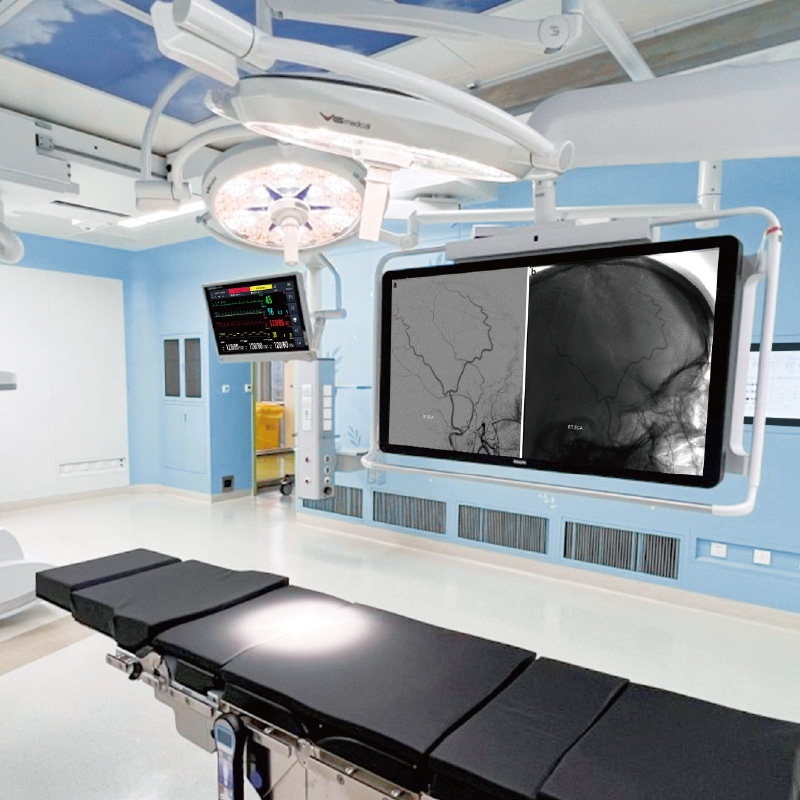
Digital operating room configuration combining surgical equipment and medical imaging displays.
VG Medical's ORPILOT integrated digital operating room solution uses AV over IP architecture with 10-gigabit switches and 4K encoders and decoders. Its listed functions include video routing, information integration, device management, and 4K/3D image transmission. The actual functions available in a project depend on the selected configuration and connected equipment.
Hospitals planning this type of solution can review the ORPILOT integrated OR system for product details and technical information.
Can a Traditional Operating Room Be Upgraded to an Integrated OR?
Yes. An existing traditional operating room may be upgraded with digital integration functions, provided that its infrastructure, equipment interfaces, and room layout support the proposed configuration. A complete room reconstruction is not always necessary, but the scope of work must be determined through a technical assessment.
A phased upgrade may include the following steps:
- Assess existing equipment: Record the installed surgical lights, operating tables, medical pendants, displays, cameras, and imaging devices.
- Check compatibility: Review available interfaces, communication protocols, video formats, and control requirements for existing equipment.
- Evaluate infrastructure: Assess network capacity, cable routes, power supply, room layout, and available installation space.
- Define integration priorities: Identify which functions are most important, such as video routing, centralized control, PACS access, or surgical recording.
- Plan installation and testing: Coordinate equipment installation, system configuration, integration testing, and staff training with the hospital's engineering and clinical teams.
For an upgrade project, compatibility should be confirmed before procurement. Not every existing medical device can be connected to every integration platform. The supplier should provide a clear list of supported interfaces and explain which functions require additional hardware or software.
When Should Hospitals Choose an Integrated OR System?
An integrated operating room is worth considering when a hospital needs to coordinate multiple surgical devices, manage video from different sources, or provide clinical information and teaching resources within the operating environment.
New hospital construction: New surgical departments have an opportunity to plan equipment positions, network infrastructure, displays, and control systems together. Early coordination can reduce the need for later structural changes.
Existing OR renovation: Hospitals upgrading older rooms can evaluate which equipment should be retained, replaced, or connected to a new integration platform. A phased approach may help manage project budgets and operating schedules.
Hospitals with multiple surgical specialties: Facilities that use endoscopic systems, medical imaging, and different surgical equipment may benefit from coordinated video distribution and information access. The required configuration should reflect the procedures performed in each room.
Teaching and training hospitals: Recording, broadcasting, and remote viewing functions can support surgical education and authorized case review. Hospitals should also establish appropriate patient consent, data access, and recording policies.
Traditional operating room equipment remains a reasonable choice when the hospital's needs are limited to essential surgical functions and independent device operation. The decision should be based on clinical workflows and project requirements rather than assuming that every operating room needs the same level of digital integration.
What Should Hospitals Consider Before Purchasing an Integrated OR System?
Choosing an integrated OR supplier involves more than comparing product lists. Hospital administrators, surgeons, biomedical engineers, IT teams, and procurement departments should review the complete project requirements before finalizing a configuration.
- Clinical requirements: Identify the surgical specialties, procedures, and equipment functions that the system must support.
- Equipment compatibility: Confirm whether existing and planned devices can communicate with the proposed integration platform.
- Video performance: Evaluate resolution, color reproduction, transmission latency, and the number of video sources and displays required.
- Information security: Review network architecture, user permissions, data storage, patient privacy, and hospital IT policies.
- Room layout: Coordinate medical pendants, surgical lights, displays, cameras, and other ceiling-mounted equipment to avoid physical interference.
- Installation and commissioning: Confirm the supplier's responsibilities for system design coordination, installation, configuration, functional testing, and acceptance.
- Training and after-sales service: Review user training, maintenance arrangements, software support, spare parts, and warranty conditions.
A detailed technical proposal should clearly define the system scope, supported interfaces, equipment list, installation responsibilities, and acceptance criteria. This makes it easier for the hospital to compare suppliers and reduce uncertainty during project implementation.
Frequently Asked Questions About Integrated and Traditional Operating Rooms
Q1: What is the main difference between an integrated operating room and a traditional operating room?
The main difference is equipment and information management. A traditional OR generally uses separate controls and independent systems, while an integrated OR connects compatible devices, video sources, and clinical information through a centralized platform.
Q2: Does an integrated operating room replace traditional surgical equipment?
No. An integrated OR still requires essential medical equipment such as surgical lights, operating tables, medical pendants, and patient monitoring devices. The integration platform connects selected equipment and information sources to support coordinated operation.
Q3: Can an integrated OR system work with equipment from different manufacturers?
Potentially, but compatibility depends on device interfaces, communication protocols, video formats, and system configuration. Hospitals should request a compatibility assessment and confirm the supported functions for each third-party device before purchasing.
Q4: Can an existing traditional operating room be upgraded without rebuilding the entire room?
In some cases, yes. A digital upgrade may be possible by adding integration hardware, network infrastructure, displays, or compatible interfaces. The required modifications depend on the existing room layout, equipment condition, and technical infrastructure.
Q5: What functions can an integrated operating room system provide?
Depending on the configuration, functions may include centralized equipment management, video routing, clinical information access, surgical recording, live broadcasting, and teaching support. The actual scope should be defined according to hospital requirements.
Q6: Is an integrated operating room always better than a traditional operating room?
Not necessarily. An integrated OR can be valuable for hospitals with complex equipment coordination and digital information requirements. A traditional configuration may be sufficient for facilities with simpler workflows. The right choice depends on clinical needs, budget, infrastructure, and future expansion plans.
Plan Your Integrated Operating Room Project with VG Medical
The choice between an integrated and traditional operating room should be based on how a hospital manages equipment, clinical information, surgical imaging, and daily workflows. Traditional OR configurations remain suitable for many facilities, while integrated systems offer additional options for centralized control, audiovisual coordination, and digital information access.
VG Medical provides operating room equipment and integrated OR solutions, including surgical lights, operating tables, medical ceiling supply units, and digital operating room systems. Its ORPILOT platform supports audiovisual integration and connected equipment management for hospitals planning new OR projects or digital upgrades.
VG Medical has also supplied and commissioned a digital operating room system for Qingyuan County People's Hospital, with project work covering system design coordination, equipment supply, installation, commissioning, integration testing, and clinical training.
Visit VG Medical's official website to learn more about its operating room equipment and system solutions. For a project quotation or technical discussion, hospitals and medical equipment distributors can share their room layout, equipment list, surgical specialties, and integration requirements with the VG Medical team.