Modern operating rooms rely on more than surgical lights, operating tables, and medical equipment. Surgeons and clinical teams also need quick access to medical images, patient information, surgical video, and communication tools during procedures. When these resources operate independently, staff may need to switch between multiple devices and interfaces, making coordination more complicated.
A digital operating room brings these technologies together through a centralized platform. By connecting surgical equipment, audiovisual systems, and hospital information networks, it creates a more coordinated working environment for surgical teams.
For hospitals planning new operating rooms or upgrading existing facilities, understanding how a digital operating room works is an important step in choosing the right equipment and integration solution.
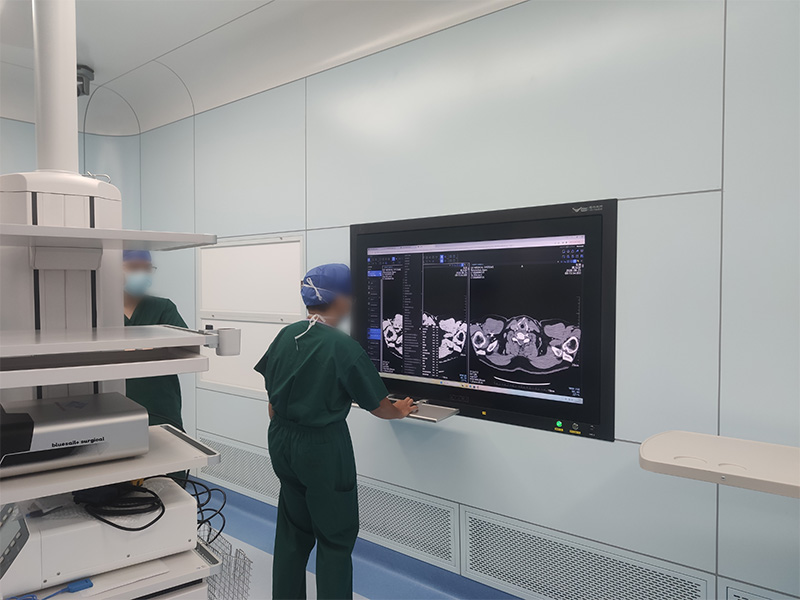
An integrated digital operating room connects surgical equipment, displays, and clinical information.
What Is a Digital Operating Room?
A digital operating room is a surgical environment where medical equipment, video sources, clinical information, and communication systems are connected through an integrated control platform. Instead of managing each device separately, medical staff can access multiple functions through a centralized interface.
A typical digital OR system may connect:
- Surgical lights and operating tables
- Medical ceiling supply units and related equipment
- Endoscopic cameras and surgical field cameras
- Medical displays and video routing equipment
- Patient monitoring and imaging systems
- Hospital information systems such as HIS, PACS, LIS, and EMR
- Surgical recording, broadcasting, and teaching platforms
The purpose is not simply to add more screens or electronic devices to the operating room. It is to make different systems communicate and work together. For example, a surgical team may view endoscopic images, patient information, and monitoring data on selected displays without repeatedly changing physical connections.
An integrated platform can also allow authorized users to control compatible equipment through a common interface, depending on system configuration and device compatibility.
In short, a digital operating room combines medical equipment, information technology, and audiovisual integration to support a more organized surgical workflow.
Key Components of an Integrated Operating Room System
A complete integrated operating room system consists of several interconnected components. The exact configuration depends on the hospital's surgical specialties, room layout, existing infrastructure, and digitalization requirements.
Centralized OR Control Platform
The central control platform acts as the operating room's management hub. It allows authorized medical staff to access different equipment functions, manage video sources, and coordinate connected devices from a unified interface.
For example, VG Medical's ORPILOT system is designed to integrate operating room equipment and information systems. It uses AV over IP technology, 10-gigabit switches, and 4K encoders and decoders to support high-quality video transmission.
Explore the ORPILOT digital OR solution for more details.
Medical Displays and Video Integration
Medical displays allow surgeons and other clinical staff to view information from different sources during a procedure. These sources may include endoscopic cameras, surgical field cameras, ultrasound equipment, and PACS imaging.
A video integration system routes selected signals to different displays according to the clinical workflow. This makes it easier to present the required images without manually reconnecting individual devices.
For demanding surgical applications, hospitals should consider resolution, color reproduction, transmission latency, compatibility, and display positioning when selecting audiovisual equipment.
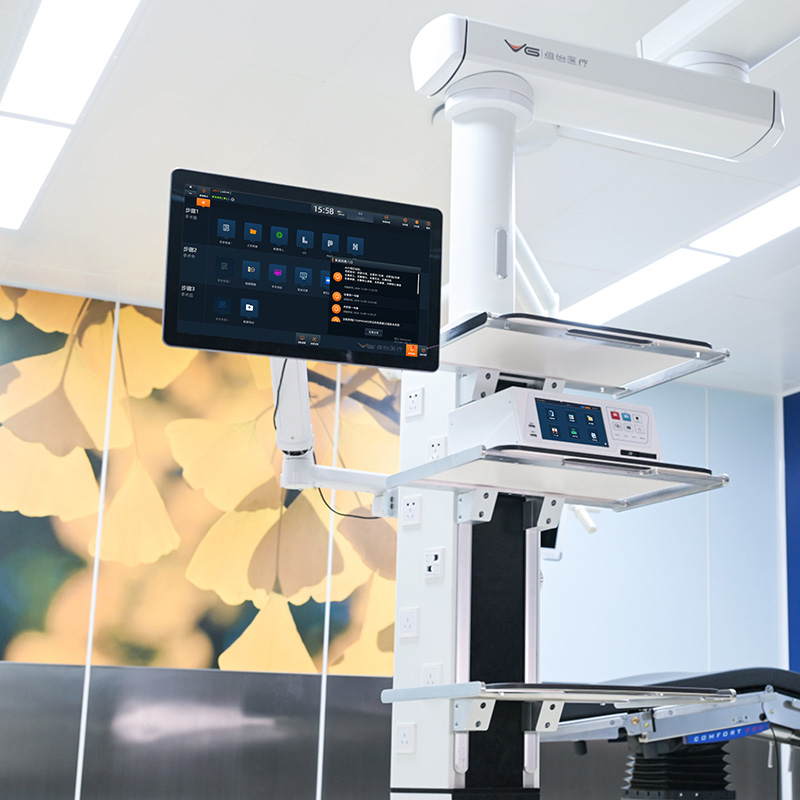
Centralized control and digital integration equipment for operating room applications.
Surgical Lights and Operating Tables
Physical medical equipment remains essential in a digital operating room. Surgical lights provide illumination of the surgical field, while operating tables support patient positioning for different procedures.
When compatible equipment is connected to the central control platform, authorized staff may be able to manage selected functions through the integrated interface. This reduces the need to operate multiple independent control panels.
Hospitals can explore surgical light systems and operating table solutions when planning an integrated surgical environment.
Medical Ceiling Supply Units
Medical ceiling supply units provide convenient access to medical gases, electrical power, and equipment connections. Their positioning helps organize the operating space and keep essential services accessible to the surgical team.
In an integrated OR design, ceiling-mounted equipment should be coordinated with displays, surgical lights, cameras, and other room infrastructure. Proper planning helps avoid unnecessary equipment interference and supports efficient use of available space.
Explore the medical ceiling pendant range for different operating room configurations.
Hospital Information System Integration
Clinical information integration is another important part of a digital OR system. Connections with HIS, PACS, LIS, and EMR platforms can help authorized personnel access relevant patient records, laboratory information, and medical images within the operating room.
Data exchange reduces the need to move between separate information terminals. It also helps create a more connected information environment across surgical departments.
Integration requirements should be discussed with the hospital's IT department to confirm interface standards, access permissions, network security, and compatibility with existing systems.
How Does a Digital OR System Work?
A digital OR system works by connecting different equipment and information sources through a common network and control platform.
A typical workflow can be divided into four stages:
- Signal collection: Cameras, endoscopic systems, medical imaging devices, and other connected equipment provide video or data signals.
- Signal processing: Encoders, decoders, and integration units process the incoming signals for distribution.
- Centralized control: Authorized staff select video sources, control compatible devices, and manage information through the central interface.
- Information distribution: Selected images and data are displayed on designated monitors or transmitted to approved teaching and remote collaboration locations.
For example, during a minimally invasive procedure, an endoscopic image can be routed to a primary surgical display. The same system may also make other approved information sources available to additional screens in the operating room.
Recording and broadcasting functions can be configured to support clinical documentation, education, and authorized remote consultation.
What Are the Main Benefits of a Digital Operating Room?
Improved Surgical Workflow Efficiency
When equipment and information are accessible through a centralized platform, medical staff can spend less time switching between separate systems. Video routing, device control, and information access become more organized.
This can simplify room preparation and support smoother coordination during surgical procedures.
Better Access to Clinical Information
Integration with hospital information systems allows authorized personnel to retrieve relevant patient data and medical images within the operating room. Having these resources available in the same working environment can support clinical decision-making and reduce unnecessary movement.
Enhanced Surgical Teaching and Collaboration
Live video transmission and recording provide useful resources for medical education. Experienced surgeons can share procedures with trainees in lecture rooms or other authorized locations.
Remote annotation and communication functions can also support discussions between medical professionals in different locations.
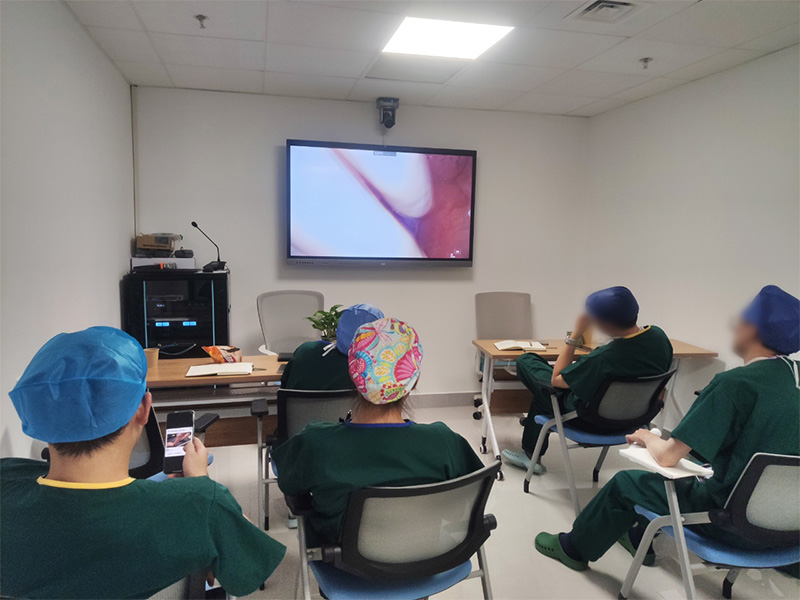
Live surgical video transmission supports medical education and remote collaboration.
VG Medical's TELEPILOT teaching system supports real-time surgical communication, remote camera control, and video annotation for teaching applications.
More Organized Surgical Documentation
Recording and storage functions can help hospitals maintain audiovisual records for authorized case review, training, and quality management. Structured documentation also makes it easier to retrieve relevant materials when needed.
Hospitals should establish appropriate access controls, retention policies, and patient privacy procedures before implementing recording and storage functions.
Flexible System Expansion
A modular digital OR architecture can make future upgrades easier. Hospitals may begin with essential video integration and centralized control, then add functions such as 3D imaging, live broadcasting, voice control, or additional information interfaces as requirements develop.
This approach allows healthcare facilities to plan digitalization according to their budgets, infrastructure, and clinical priorities.
Digital Operating Room vs. Traditional Operating Room
The main difference between a traditional operating room and a digital operating room is how equipment and information are managed.
| Comparison | Traditional OR | Digital OR |
|---|---|---|
| Equipment control | Multiple independent controls | Centralized control for compatible devices |
| Video management | Separate video connections | Integrated video routing |
| Clinical information | Accessed through separate terminals | Integrated information access |
| Surgical teaching | Often requires separate equipment | Supports integrated broadcasting and recording |
| System expansion | May require additional independent systems | Can support modular integration |
A digital operating room does not replace the need for reliable medical equipment or clinical expertise. Instead, it connects existing resources to create a more coordinated working environment.
How to Choose the Right Digital Operating Room System
Selecting a digital OR solution requires consideration of both current clinical requirements and long-term hospital development plans. Before choosing a supplier, hospital project teams should evaluate several practical factors.
- System compatibility: Confirm whether the platform supports the hospital's existing surgical equipment, cameras, displays, and information systems.
- Video performance: Evaluate resolution, image quality, color reproduction, and transmission latency for the intended surgical applications.
- Control interface: Check whether the interface is easy for surgeons, nurses, and anesthesiologists to use.
- Network infrastructure: Assess network capacity, system architecture, data security, and storage requirements.
- Scalability: Consider whether additional operating rooms, displays, cameras, and software modules can be integrated later.
- Installation and training: Confirm whether the supplier provides system design, installation, commissioning, integration testing, and staff training.
- Technical support: Review warranty terms, maintenance arrangements, software updates, and spare parts availability.
It is also useful to involve surgeons, operating room nurses, biomedical engineers, and IT personnel during the planning stage. Their feedback helps ensure that the selected configuration addresses actual clinical workflows rather than simply adding technology to the room.
VG Medical Digital Operating Room Solutions
VG Medical specializes in operating room and ICU equipment, including surgical lights, operating tables, medical ceiling supply units, and digital integrated OR solutions.
Its digital operating room portfolio includes ORPILOT, TELEPILOT, MATRIX BLOCK, TELECART, and E-LEARNING. These products address different requirements, including centralized equipment management, audiovisual integration, video transmission, surgical teaching, and clinical information sharing.
The ORPILOT platform supports AV over IP architecture, 4K/3D video transmission, equipment management, and integration with hospital information systems. TELEPILOT focuses on surgical communication and remote teaching, while MATRIX BLOCK provides digital video integration and management capabilities.
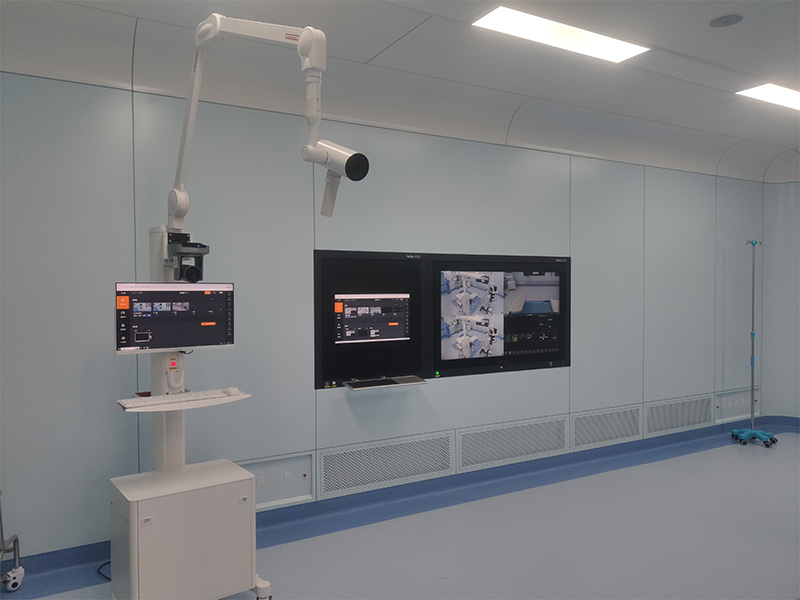
VG Medical integrated operating room project with centralized digital displays.
With experience in operating room equipment manufacturing and project delivery, VG Medical provides solutions for hospitals planning new operating rooms or upgrading existing facilities.
Each project can be configured according to room layout, equipment compatibility, clinical requirements, and the hospital's digitalization goals.
Frequently Asked Questions About Digital Operating Rooms
Q1: What is the main purpose of a digital operating room?
The main purpose is to connect surgical equipment, video sources, and clinical information through a centralized platform. This helps medical staff access relevant information, manage compatible devices, and coordinate surgical workflows more efficiently.
Q2: What equipment is included in an integrated operating room system?
A typical system may include a central control platform, medical displays, video encoders and decoders, surgical cameras, surgical lights, operating tables, medical ceiling supply units, and interfaces with hospital information systems.
Q3: Can a digital OR system integrate with existing hospital equipment?
Yes, depending on device interfaces, communication protocols, and system compatibility. A technical assessment should be completed before installation to confirm which existing devices and information systems can be connected.
Q4: Does a digital operating room support 4K surgical video?
Many modern digital OR platforms support 4K video transmission. For example, VG Medical's ORPILOT uses AV over IP technology with 4K encoders and decoders to support high-resolution surgical imaging. Actual performance depends on the complete system configuration.
Q5: What is the difference between a digital OR system and a surgical teaching system?
A digital OR system is a broader integration platform that can connect equipment, video, and clinical information. A surgical teaching system focuses more specifically on video transmission, recording, remote observation, and educational collaboration. Teaching functions can also be included as modules within a wider digital OR solution.
Q6: Can a digital operating room be installed in an existing hospital?
Yes. Retrofitting may be possible depending on the existing network infrastructure, room layout, equipment interfaces, and installation requirements. A site assessment helps determine the necessary modifications and integration scope.
Q7: How long does it take to install a digital operating room system?
Installation time depends on the number of operating rooms, system complexity, room readiness, network infrastructure, and integration requirements. The supplier should provide a project schedule covering installation, commissioning, testing, and clinical staff training.
Planning Your Digital Operating Room Project
A successful digital operating room depends on more than choosing advanced equipment. The control platform, video infrastructure, medical devices, and hospital information systems must work together according to the actual needs of the surgical team.
Whether your hospital is developing a new surgical center or upgrading existing operating rooms, selecting an integrated solution with suitable compatibility, video performance, and expansion capabilities can help establish a reliable foundation for long-term digital development.
Contact VG Medical to discuss your operating room requirements, equipment configuration, and digital integration project.