Choosing the right hospital bed for general wards and long-term care requires evaluating patient mobility, care duration, nursing workflows, safety features, and maintenance requirements. General ward beds should support routine inpatient treatment, examination, and recovery, while long-term care beds place greater emphasis on frequent repositioning, accessibility, caregiver ergonomics, and sustained patient comfort. Hospitals should compare bed adjustment functions, safe working load, side rail design, mattress compatibility, mobility, and applicable medical device standards before purchasing. The best medical hospital bed is one that matches the patient's needs and the facility's actual care environment.
Understand the Different Requirements of General Wards and Long-Term Care
Although general ward beds and long-term care beds may share similar designs, their intended applications are different. Selecting a bed based only on appearance or purchase price can result in unnecessary functions, inadequate safety arrangements, or difficulties for nursing staff.
General ward beds are primarily used in medical and surgical inpatient departments. Patients may stay for several days or weeks while receiving treatment, undergoing examinations, or recovering after surgery. Bed adjustment, patient transfer, cleaning, and routine nursing access are important considerations.
Long-term care beds are intended for patients who require extended assistance with daily activities, mobility, positioning, and personal care. Their selection should place additional emphasis on frequent height and backrest adjustments, accessibility for caregivers, patient transfer, and compatibility with appropriate pressure redistribution mattresses.
The following table summarizes the main differences:
| Evaluation Factor | General Ward Bed | Long-Term Care Bed |
|---|---|---|
| Main application | Routine inpatient treatment and recovery | Extended patient care and daily assistance |
| Adjustment needs | Basic backrest, leg and height adjustment as required | Frequent positioning and height adjustment |
| Patient mobility | Routine bed entry, exit and transfer | Assisted transfers and mobility support |
| Safety priorities | Side rails, brakes and stable positioning | Entrapment risk, fall prevention and caregiver access |
| Mattress requirements | Compatible hospital mattress | Potential need for pressure redistribution systems |
| Maintenance focus | Routine inspection and cleaning | Frequent inspection due to extended use |
One important distinction is that long-term care does not automatically require a more complicated bed. The configuration should reflect the patient's functional ability, clinical risk assessment, and level of caregiver assistance.
Choose the Appropriate Hospital Bed Adjustment Functions
Bed adjustment is one of the most important factors when selecting a medical hospital bed. Different adjustment functions support different clinical and nursing activities.
Height Adjustment
Height adjustment allows caregivers to position the bed at a more suitable working level during examinations, nursing procedures, and patient transfers. Lowering the bed can also make it easier for certain patients to get in and out, depending on their mobility and transfer ability.
When comparing models, check the minimum and maximum bed height, adjustment range, motor performance, and whether the control system allows caregivers to operate the bed efficiently.
Backrest and Leg Section Adjustment
Adjustable backrest and leg sections help accommodate different resting and treatment positions. Backrest elevation can support comfortable positioning during meals, communication, and certain nursing activities. Adjustable leg sections provide additional positioning flexibility.
For long-term care environments, frequent repositioning may be part of an individual care plan. Therefore, smooth adjustment and accessible controls are particularly valuable.
Electric vs. Manual Hospital Beds
Electric beds use powered actuators to adjust selected bed sections through control panels or handsets. Manual beds generally rely on mechanical cranks or other manual adjustment mechanisms.
Electric models are often preferable in facilities where frequent repositioning is required or where reducing repetitive physical effort for caregivers is a priority. Manual models may be suitable for lower-intensity applications with limited adjustment requirements and tighter equipment budgets.
Hospitals should compare the total cost of ownership, including electricity requirements, actuator maintenance, replacement parts, and expected service life, rather than considering the initial purchase price alone.
Evaluate Patient Safety and Bedside Protection Features
Patient safety should be a central consideration when purchasing hospital beds, especially for older adults, patients with reduced mobility, and individuals who require extended assistance.
Side Rails and Entrapment Prevention
Side rails can provide support during repositioning and help define the patient's bed space. However, they should not automatically be treated as fall-prevention devices or used without an individual risk assessment.
The U.S. Food and Drug Administration (FDA) identifies entrapment between bed components, mattresses, and side rails as an important hospital bed safety concern. Potential hazards can occur when gaps are created by incompatible mattresses, damaged rails, or changes to bed accessories.
When evaluating a bed, check:
- Side rail stability and locking mechanisms.
- Compatibility between the mattress and bed frame.
- Potential gaps around the headboard, footboard, and side rails.
- Ease of access for nursing staff and caregivers.
- Emergency release and lowering functions, where provided.
Facilities should assess the complete bed system, including its mattress and accessories, rather than evaluating the bed frame separately.
Caster Brakes and Bed Mobility
Hospital beds need reliable caster systems for positioning, cleaning, and patient transfers. Central locking systems can simplify brake operation and help prevent unintended movement during care activities.
Buyers should check caster diameter, braking arrangements, directional control, maneuverability, and floor compatibility. The bed should remain stable when stationary and move predictably when repositioned by staff.
Emergency Functions
Some hospital beds provide rapid backrest release or CPR positioning functions. These features are particularly relevant when the bed is intended for acute care or emergency applications.
However, buyers should distinguish standard ward beds from specialized emergency rescue beds. A rescue bed may include quick-release mechanisms and additional mobility features that are not necessary for every general ward or long-term care application.
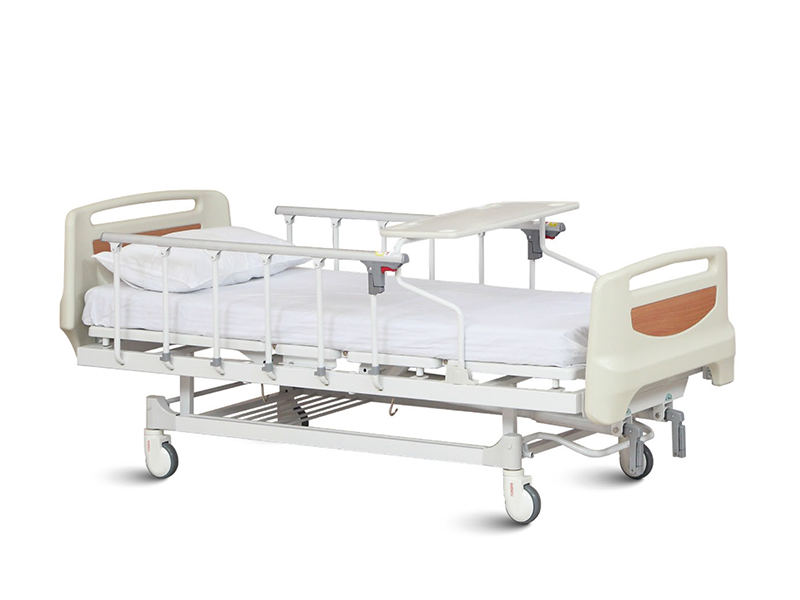
VG Medical Amcare D48 Electric Hospital Bed
The VG Medical Amcare D48 electric hospital bed features side drainage hooks, a one-handed CPR release, a high-density copolymer mattress, and 125 mm casters with three operating modes: lock, free, and directional. These features provide practical considerations for hospitals evaluating bedside functionality, emergency response, and mobility requirements.
Select the Right Mattress and Patient Support System
A hospital bed should be evaluated together with its mattress. Mattress selection affects patient comfort, positioning, pressure redistribution, cleaning, and overall bed safety.
For general wards, a suitable hospital mattress should provide appropriate support, durability, and compatibility with the bed's adjustable sections. Materials should also be compatible with the healthcare facility's cleaning and disinfection procedures.
For long-term care, mattress selection requires additional attention. Patients who remain in bed for extended periods may have increased pressure injury risk, depending on their mobility, skin condition, nutrition, circulation, and other clinical factors.
Depending on individual risk assessments, facilities may consider:
- Standard hospital mattresses: For patients with routine support requirements.
- High-density foam mattresses: For appropriate support and pressure distribution.
- Pressure redistribution mattresses: For patients who require additional pressure management.
- Alternating pressure systems: For selected patients based on clinical assessment and care protocols.
It is important to understand that an appropriate mattress does not replace regular repositioning, skin assessment, or other pressure injury prevention measures. Mattress selection should follow the facility's clinical protocols.
Consider Bed Dimensions, Weight Capacity, and Room Layout
Physical specifications should be checked before placing a bulk order. A bed that performs well technically may still be unsuitable if its dimensions or load capacity do not match the hospital's requirements.
Key specifications to compare include:
- Overall dimensions: Confirm bed length, width, and clearance requirements for the ward.
- Safe working load: Verify that the manufacturer's rated capacity covers the intended patient and relevant accessories.
- Mattress platform dimensions: Ensure compatibility with the specified mattress model.
- Height range: Check whether the minimum and maximum heights meet patient transfer and nursing requirements.
- Bed extension: Determine whether adjustable length is needed for different patient populations.
- Under-bed clearance: Check compatibility with patient lifting equipment and cleaning procedures.
- Power requirements: Verify voltage, frequency, plug configuration, and electrical safety requirements.
Room layout is equally important. Hospitals should allow sufficient space for wheelchairs, patient lifts, bedside tables, medical equipment, and caregiver movement. In long-term care facilities, accessibility should be evaluated for both routine nursing and assisted patient transfers.
Check Medical Bed Standards and Manufacturer Documentation
Safety standards and regulatory documentation are essential when purchasing a medical hospital bed. Requirements vary according to the product classification, intended use, and destination market.
One important technical reference is IEC 60601-2-52, which specifies particular requirements for the basic safety and essential performance of medical beds intended for adults.
Hospital procurement teams should also review the following documentation where applicable:
- ISO 13485 medical device quality management certification.
- IEC 60601-1 electrical safety documentation for applicable powered medical beds.
- IEC 60601-1-2 electromagnetic compatibility documentation where applicable.
- EU MDR documentation and applicable CE conformity information for European markets.
- Product technical specifications and instructions for use.
- Warranty, maintenance, and spare parts documentation.
Do not assume that a manufacturer's ISO 13485 certificate automatically means every product has the same regulatory status. Buyers should verify the certificate scope, product model, applicable conformity documents, and registration requirements for their destination market.
For additional guidance, refer to the FDA hospital bed safety guidance, which explains dimensional assessment and entrapment risk reduction for hospital bed systems.
Compare Hospital Bed Manufacturers and After-Sales Support
Choosing a reliable hospital bed manufacturer involves more than comparing product specifications. Manufacturing consistency, quality management, technical support, and spare parts availability all influence the long-term value of the purchase.
For hospital procurement teams, the following factors deserve attention:
Manufacturing capability: Evaluate production facilities, quality inspection procedures, engineering experience, and the ability to maintain consistent product specifications across bulk orders.
Product customization: Check whether the manufacturer can accommodate project-specific requirements, including bed configurations, accessories, electrical specifications, and packaging.
Quality assurance: Request relevant quality certificates, product test reports, inspection records, and regulatory documentation.
After-sales service: Confirm warranty coverage, spare parts availability, technical assistance, and maintenance procedures.
Export experience: For international buyers, evaluate the manufacturer's experience with destination-market regulations, export documentation, shipping, and distributor support.
Hospitals should also consider lifecycle costs, including maintenance, consumable replacement, energy use, staff training, and equipment downtime. A lower initial quotation does not necessarily represent a lower long-term cost.
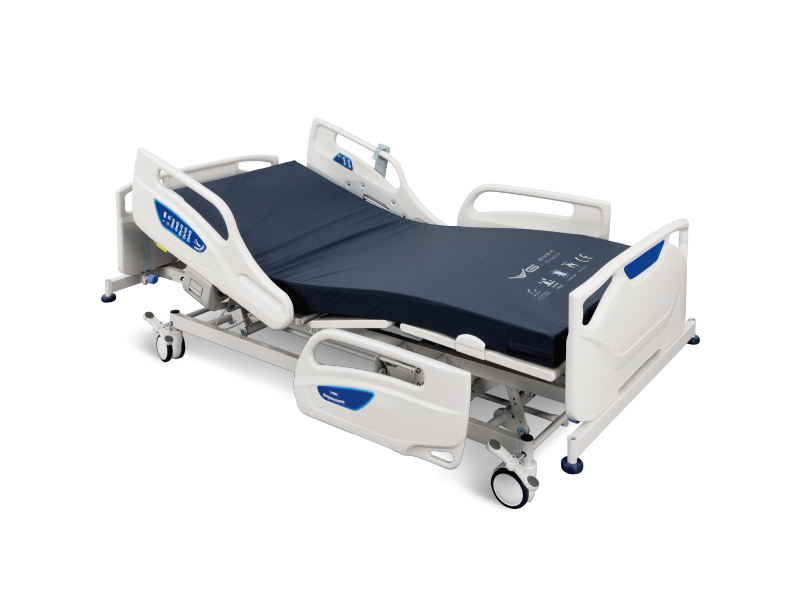
VG Medical PXB03 Emergency Rescue Bed
For hospitals that also need emergency and critical care equipment, the VG Medical PXB03 Emergency Rescue Bed offers a different configuration from a standard ward bed. Its features include dual-lock guardrails, quick-release cardiac resuscitation functionality, a five-wheel shock-absorbing system, and central-controlled silent casters. It is designed for emergency, ICU, anesthesia, and recovery environments rather than serving as a direct substitute for a standard long-term care bed.
Consider Patient Transfer and Bedside Workflow
Hospital bed procurement should also account for how patients move between wards, examination rooms, diagnostic departments, and treatment areas.
For patients who require assisted transfers, compatible stretchers and transfer equipment can improve workflow coordination. Hospitals should consider transfer height, braking systems, side rail configuration, platform dimensions, and compatibility with existing beds.
For example, the VG Medical VG-PTT-001 Patient Transport Trolley features a split deck, concealed side rails, central locking foot pedals, and an adjustable backrest. Its published height range is 510–850 mm, with backrest adjustment from 0–70 degrees.
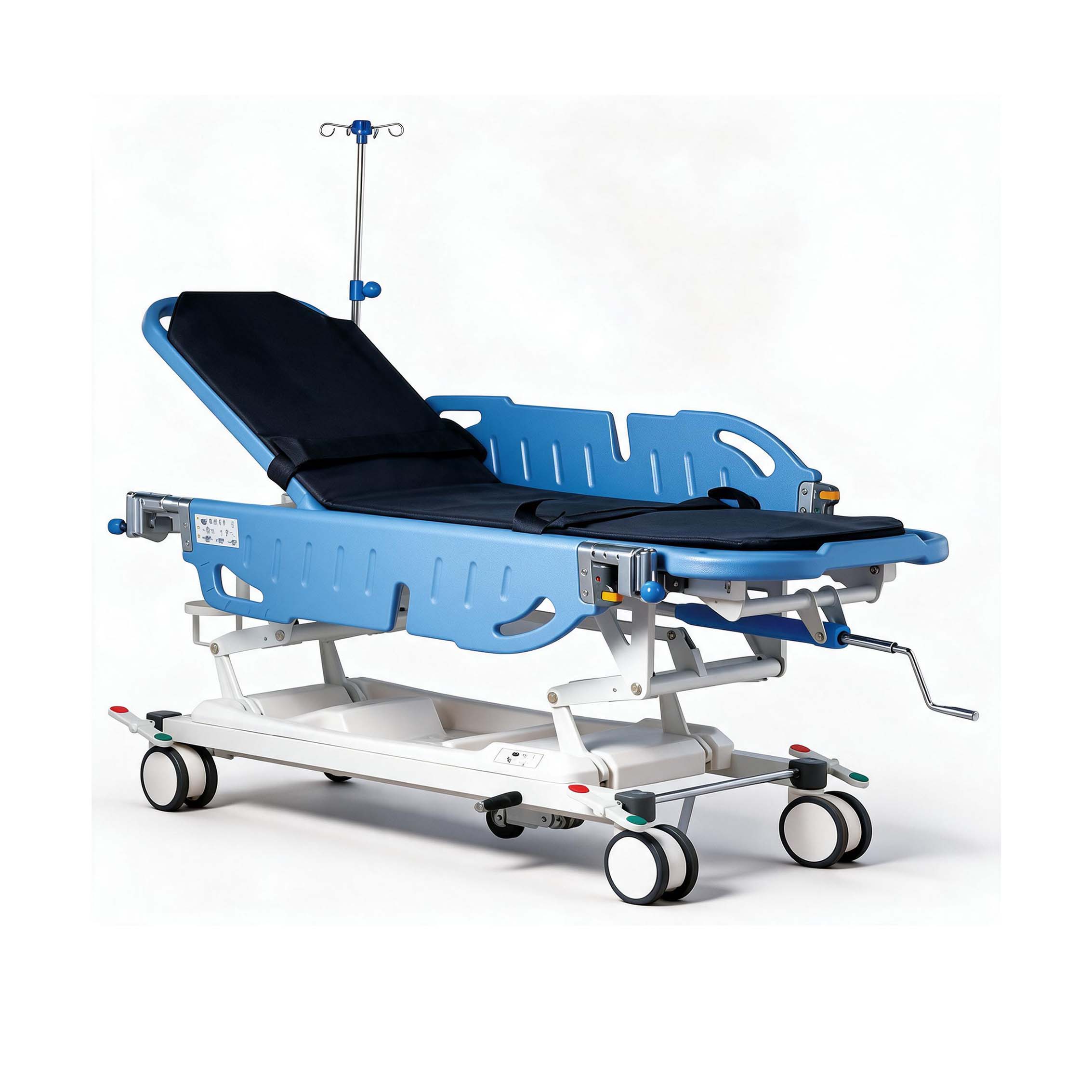
VG Medical VG-PTT-001 Patient Transport Trolley
Separating routine ward bed requirements from patient transport requirements helps hospitals avoid purchasing expensive equipment with functions that are not needed for everyday inpatient care.
Hospital Bed Procurement Checklist
Before confirming an order, procurement teams can use this checklist to compare manufacturers and verify product suitability.
| Evaluation Area | Items to Confirm |
|---|---|
| Clinical requirements | General ward, rehabilitation, or long-term care application. |
| Adjustment functions | Backrest, leg section, height, and positioning functions. |
| Patient safety | Side rails, brakes, emergency release, and entrapment assessment. |
| Mattress compatibility | Dimensions, support characteristics, and pressure management needs. |
| Technical specifications | Dimensions, safe working load, height range, and power requirements. |
| Regulatory compliance | Applicable IEC standards, ISO documentation, and market registration. |
| Supplier capability | Manufacturing capacity, quality control, and customization. |
| Lifecycle support | Warranty, maintenance, spare parts, and technical training. |
Why Choose VG Medical for Hospital Bed Projects?
VG Medical Technology, established in 2003, specializes in medical equipment manufacturing and integrated solutions for operating rooms, intensive care units, and general wards.
Its product portfolio includes electric hospital beds, emergency rescue beds, patient transport trolleys, surgical lights, operating tables, medical ceiling supply units, and digital integrated OR systems.
For general ward projects, VG Medical provides patient bed configurations designed to support inpatient care and nursing workflows. The Amcare D48 Electric Hospital Bed features a high-density copolymer mattress, side drainage hooks, one-handed CPR release, and a three-mode caster system.
For emergency and critical care environments, the PXB03 Emergency Rescue Bed offers additional positioning and emergency access features. The VG-PTT-001 Patient Transport Trolley provides a separate option for patient transfer between clinical departments.
VG Medical reports more than 20 years of medical equipment manufacturing experience, over 85 independent patents, and exports to more than 40 countries and regions. Its quality management system includes ISO 13485 certification, with product-specific regulatory documentation available for relevant models.
For hospitals, distributors, and medical equipment procurement companies, the important consideration is matching each product configuration to its intended clinical application, rather than selecting equipment based solely on a general product category.
Explore VG Medical hospital beds and its general ward equipment solutions to review available configurations.
Frequently Asked Questions About Hospital Beds
1. What type of hospital bed is best for a general ward?
An adjustable hospital bed with stable side rails, reliable caster brakes, suitable mattress support, and easy-to-operate positioning controls is generally appropriate for general wards. Electric models are particularly useful when frequent height and backrest adjustments are required.
2. What is the difference between a hospital bed and a long-term care bed?
A standard hospital bed is generally designed for inpatient treatment, examination, and recovery. A long-term care bed places greater emphasis on extended patient comfort, frequent repositioning, caregiver accessibility, and compatibility with pressure redistribution mattresses. The appropriate configuration depends on the patient's clinical and mobility needs.
3. Are electric hospital beds better than manual beds?
Electric hospital beds provide powered adjustment of selected sections and can reduce the physical effort involved in routine positioning. Manual beds may be sufficient for applications with limited adjustment requirements. The best choice depends on patient needs, staffing arrangements, budget, and maintenance resources.
4. What safety features should a medical hospital bed have?
Important features include stable side rails, secure locking mechanisms, reliable caster brakes, compatible mattress dimensions, appropriate safe working load, and accessible emergency functions where required. Hospitals should assess entrapment risks across the complete bed, mattress, and accessory system.
5. What is IEC 60601-2-52 for hospital beds?
IEC 60601-2-52 is an international particular standard addressing the basic safety and essential performance of medical beds intended for adults. It is an important technical reference for manufacturers and healthcare procurement teams evaluating medical bed safety.
6. How do I choose a reliable hospital bed manufacturer?
Evaluate manufacturing experience, ISO 13485 quality management certification, product-specific regulatory documentation, technical specifications, customization capabilities, spare parts availability, warranty terms, and after-sales support. Request product samples or demonstrations when possible before placing large orders.
7. What should hospitals consider when purchasing hospital beds in bulk?
Hospitals should prepare a standardized equipment specification covering bed dimensions, adjustment functions, safe working load, mattress compatibility, electrical requirements, accessories, certifications, warranty, and delivery schedules. Standardizing specifications across departments can simplify staff training, maintenance, and spare parts management.
Find the Right Hospital Bed Solution with VG Medical
Selecting a suitable hospital bed is an important part of building a safe and efficient inpatient care environment. General wards typically require practical adjustment functions and reliable daily operation, while long-term care facilities should pay additional attention to patient positioning, caregiver accessibility, and mattress compatibility.
As a medical equipment manufacturer, VG Medical offers hospital bed products and related medical equipment for general wards, ICU environments, and patient transfer applications.
Whether you are purchasing beds for a new hospital, upgrading an existing ward, or sourcing products for distribution, VG Medical can provide product specifications and project-related equipment information to support your procurement process.